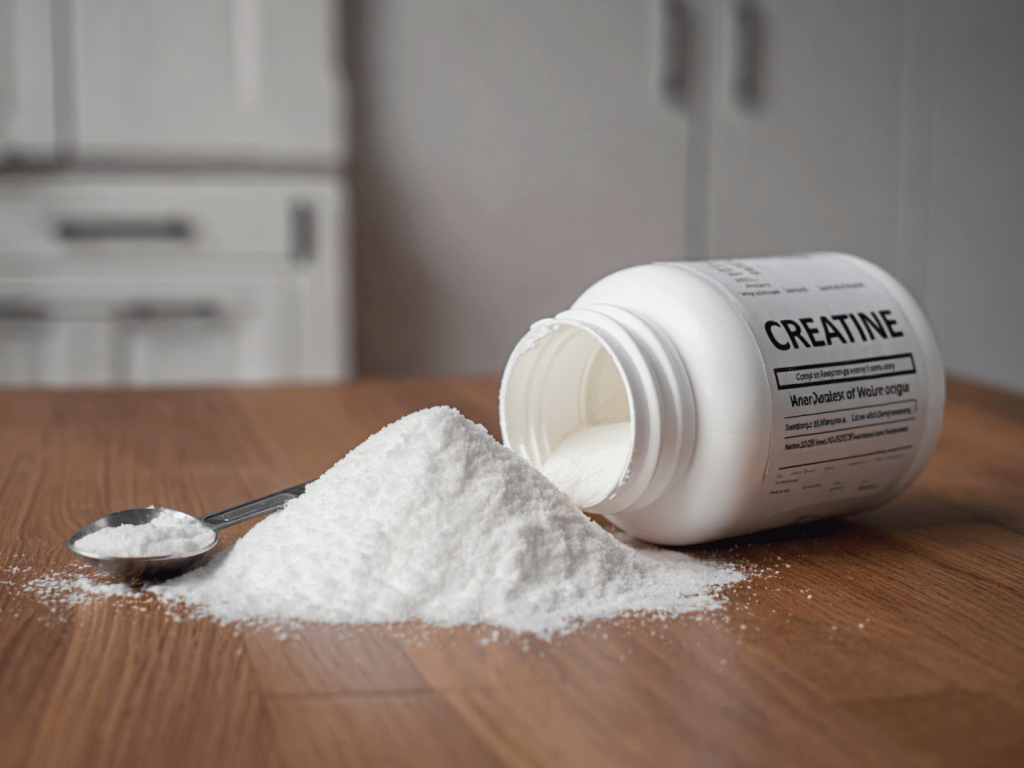
When I first heard about creatine, I’ll admit—I thought it was something only athletes and bodybuilders used. But once I began researching and discussing it with my dietitian, I started experimenting with it myself, and I realized that creatine is so much more than a gym supplement.
It’s one of the most well-researched natural compounds in wellness science, and it plays a major role in energy, focus, and longevity—especially for women and anyone living an active, holistic lifestyle.
Creatine is made naturally in our bodies from amino acids found in foods like fish and red meat. It’s stored mostly in the muscles, but it also powers the brain, heart, and cells by helping them quickly regenerate ATP—the body’s main energy molecule. In other words, creatine acts like a cellular battery charger that keeps you running strong all day long (Harvard Health, 2024; Cleveland Clinic, 2023).
The Physical Benefits: Strength, Recovery & Graceful Aging
One of the things that surprised me most was how much creatine supports overall wellness—not just muscle gain.
According to research from the Journal of the International Society of Sports Nutrition (JISSN, 2021), creatine helps:
- Improve muscle strength and endurance
- Support lean muscle growth (especially when paired with resistance training)
- Reduce post-workout soreness and improve recovery
- Slow age-related muscle loss and maintain balance in older adults
For women, this means better energy during workouts, more stability as we age, and even stronger bones over time.
✨ Staying active and strong isn’t about bodybuilding—it’s about body care. Feeling capable and confident in your body is a foundation for lifelong wellness.
The Brain & Cognitive Benefits: Focus, Memory, and Clarity
Creatine isn’t just for the body—it’s brain fuel, too.
A Nature Scientific Reports (2024) study found that even a single dose of creatine improved reasoning, problem-solving, and memory—especially in people experiencing sleep deprivation or stress.
That means creatine may help support:
- Mental clarity and focus
- Stress resilience
- Energy and productivity on busy days
People who eat plant-based diets often see the biggest brain benefits since plants naturally contain little to no creatine.
Why Creatine Matters for Women’s Wellness
Women’s health experts are paying closer attention to creatine because of its wide-ranging benefits:
🌿 Bone density and muscle tone — Especially during and after menopause
🌿 Energy and mood support — Helps reduce fatigue linked to hormonal changes
🌿 Cognitive protection — Supports focus and mental clarity under stress
Because women typically have lower creatine levels than men (and many eat less red meat or fish), supplementation can make a meaningful difference.
I see creatine as part of a holistic self-care plan—something that empowers your body at the cellular level to keep you energized and balanced.
How I Take Creatine the Wellness Way
Here’s how I’ve personally made creatine part of my wellness routine:
- I take 3–5 grams of creatine monohydrate daily (this is the most researched and safest form).
- I mix it into my morning tea, smoothie, or coconut water.
- I drink plenty of water throughout the day to stay hydrated.
I skip the “loading phase” that some people recommend—it’s unnecessary. Over time, your body naturally builds up its creatine stores. Within a few weeks, I started noticing more steady energy, clearer focus, and better post-workout recovery.
According to the Mayo Clinic (2023), creatine is safe for healthy adults when used responsibly.
Natural Food Sources of Creatine
Even before I began supplementing, I learned that creatine is found in everyday foods—especially animal proteins. Here’s a look at how much creatine you can get from different foods:
| Food | Serving Size | Approx. Creatine Content |
|---|---|---|
| Beef (steak) | 1 lb (454 g) | ~2 grams |
| Pork | 1 lb (454 g) | ~2 grams |
| Salmon | 1 lb (454 g) | ~1 gram |
| Tuna | 1 lb (454 g) | ~1 gram |
| Cod | 1 lb (454 g) | ~0.3 grams |
| Chicken | 1 lb (454 g) | ~0.4 grams |
Most people would need to eat several pounds of these foods daily to reach the 3–5 grams typically recommended for performance and brain health. That’s why supplementation is a simple and sustainable option—especially if you follow a mostly plant-based diet.
Safety and Quality Tips
Creatine is considered safe for most adults, but I always recommend checking with your healthcare provider first, especially if you’re pregnant, breastfeeding, or have kidney or blood pressure concerns.
When shopping for creatine, I look for:
✅ Creatine monohydrate (the gold standard)
✅ NSF Certified for Sport or other third-party testing
✅ No artificial additives or fillers
These small steps make sure you’re fueling your body with the purest, most effective form available.
Creatine has become one of my favorite wellness tools because it bridges the gap between fitness and holistic health. It’s not just for athletes—it’s for anyone who wants to feel stronger, sharper, and more energized.
True vitality starts with understanding your body’s natural rhythms—and creatine is one small, science-backed way to support them.
So whether you’re lifting weights, managing a busy schedule, or simply trying to move through life with more focus and flow—consider creatine your new wellness ally.
References
- Harvard Health (2024). What Is Creatine?
- Cleveland Clinic (2023). Creatine: What It Does, Benefits, Supplements & Safety.
- Journal of the International Society of Sports Nutrition (2021). Common Questions and Misconceptions About Creatine Supplementation.
- Nature Scientific Reports (2024). Single-Dose Creatine Improves Cognitive Performance During Sleep Deprivation.
- Mayo Clinic (2023). Creatine.
 Sapodilla Wellness